Discover how a network assessment checklist reveals hidden risks that standard reports miss. Ensure your network is secure and reliable with our insights.

October 9, 2026
When a business relies on a managed service provider for cybersecurity but doesn’t define who owns incident response, legal and compliance risks can remain even after systems are restored. The technical fix may be fast, but unresolved responsibilities can lead to fines or lawsuits later.
Picture this: a ransomware attack locks up your files on a Friday afternoon. By Monday, your managed service provider has everything running again, servers humming, data restored, threat contained. You'd think the crisis is over.
But systems coming back online is not the same as the incident being closed. State and federal breach notification laws may require you to alert customers or regulators within a set window, and that clock doesn't stop just because your network is healthy again. If nobody at your company was ever assigned to make that call, the technical win can quietly turn into a legal liability.
That gap—between "fixed" and "finished"—is where many businesses get caught off guard. It rarely shows up in the contract you signed, and it rarely gets discussed until an incident forces the question. Understanding how it forms, and who it leaves exposed, is the first step to closing it before it costs you.

A cybersecurity incident typically starts with damage control: stop the threat, patch the hole, bring systems back up. A managed service provider is usually well-equipped for exactly that, leaning on remote monitoring and current cybersecurity tools to get operations running again.
Yet restoring a server has nothing to do with satisfying a regulator, and that's precisely where the story keeps going. Certain data breaches trigger a legal obligation to notify affected customers or regulators within a specific window, and missing that window can mean fines or lawsuits even though every system is humming along normally.
The reason this keeps happening is structural: most service level agreements are written around uptime and technical support, not around who owns the legal or compliance aftermath. When no one is named for that job, the notification, the filing, the customer letter, simply doesn't happen on time, or doesn't happen at all.
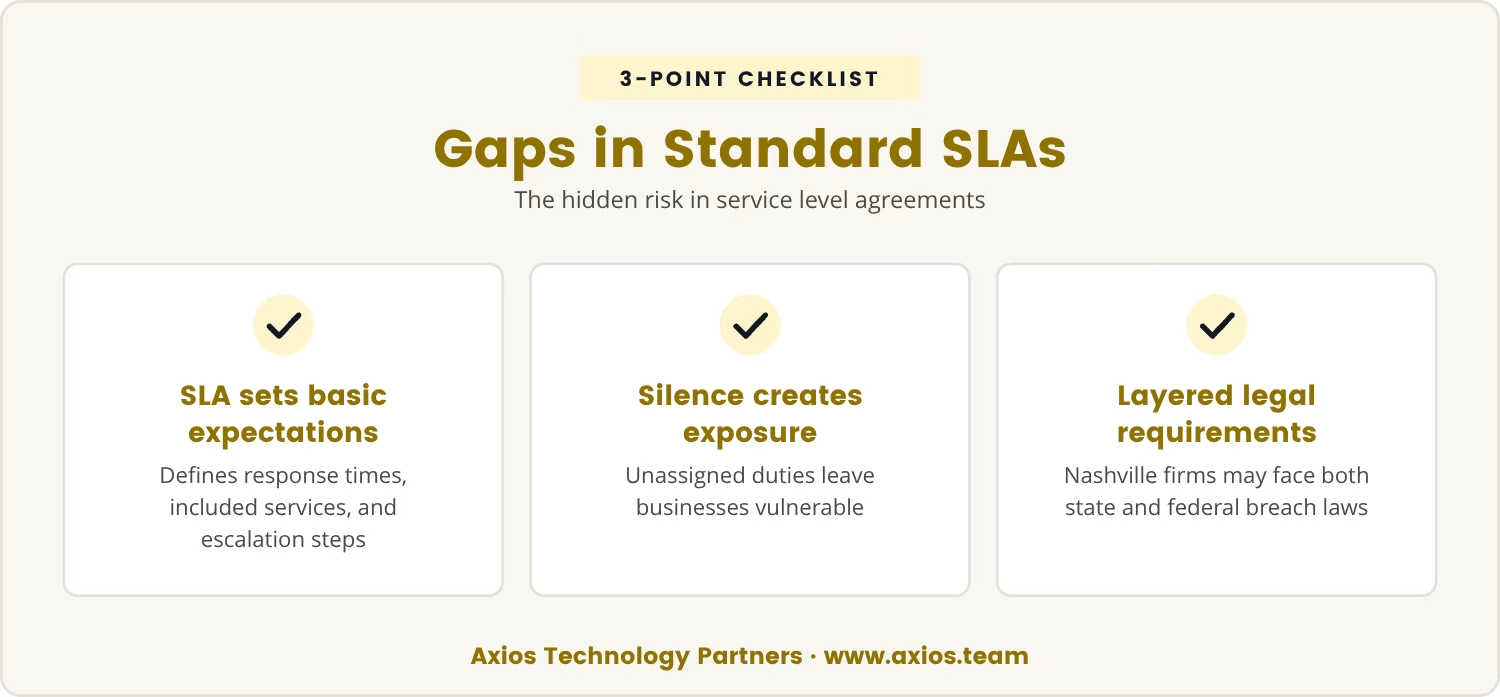
Most businesses sign a service level agreement (SLA) when they bring on an MSP, and that document is where expectations get set. It spells out what the provider will do: how fast they'll respond to downtime, what IT support company services are included, how escalations work.
What it typically leaves out is just as important. An SLA might promise system restoration within four hours, yet say nothing about who calls the regulator or loops in legal counsel once the servers are back.
That silence is where businesses end up exposed. A company operating in Nashville, for instance, can be subject to both state and federal data breach laws at once, and a missed notification isn't a paperwork slip when no one was ever assigned to send it, it's a compliance failure with real consequences.
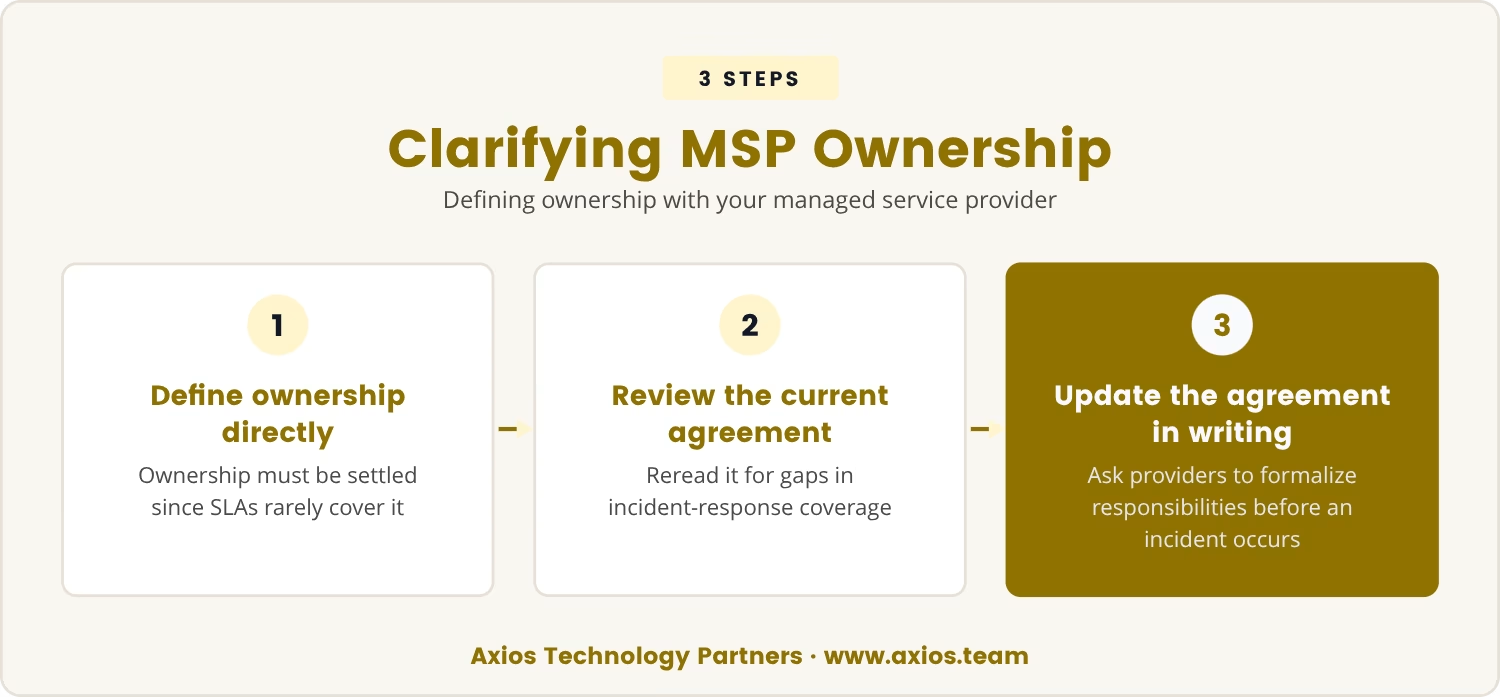
Since the SLA rarely settles the question on its own, ownership has to be defined directly. Outsourcing IT functions only works if you know precisely which incident-response tasks your MSP is handling and which ones stay with your own staff.
Start by pulling your current agreement and reading it with that question in mind. Does it mention incident response beyond the technical fix? Is anyone named for customer notification, regulatory reporting, or evidence preservation?
If the answer is no, that's the conversation to have with your provider now, before an incident forces it. Ask them to state their responsibilities in writing and update the agreement accordingly, so nothing is left to assumption.
Skipping that conversation doesn't erase the risk, it just delays when you discover it, usually during the event itself. Here's how the breakdown tends to unfold once roles are left undefined.
Your MSP restores your systems quickly, yet no one files the required breach notification with regulators. That oversight alone can result in penalties.
Even with the technical issue fully resolved, it's your business, not the MSP, that's typically held responsible for failing to meet legal obligations.
Without a clear plan, customer notifications slip past their window, and that delay both damages trust and raises the odds of a lawsuit.
If no one is assigned to preserve digital evidence, important data may get overwritten, which makes defending your business far harder if legal action follows.
Unclear roles carry through into the claims process too, creating confusion that can delay payouts or lead to outright denials.
Since each of those breakdowns traces back to an undefined role, closing the gap starts with assigning ownership before anything happens. A few concrete steps:
For companies in Nashville specifically, these steps aren't optional housekeeping, they're a response to real regulatory pressure. State and federal rules often demand quick action after a data breach, and a business in healthcare, finance, or another regulated industry can face lasting effects from a missed deadline or an overlooked notification.
Even when your managed IT services provider is local and knows the regulatory landscape well, legal compliance responsibility usually stays with your business regardless. That's precisely why every piece of your incident response needs a name attached to it, not just a general assumption that someone will handle it.
That responsibility doesn't expire once the crisis passes, either. The technical side of an incident might wrap up in hours, but the legal and compliance consequences can stretch on for months or years, with regulators investigating well after systems are back online and lawsuits or insurance disputes surfacing long after the headlines fade.
Left unassigned, ownership of incident response means your business absorbs all of that alone. Naming roles now, while there's no crisis forcing the decision, is what keeps those costs from landing on you unexpectedly later.

If your business has 40 to 100 users, it's easy to assume your managed service provider covers every part of incident response—until a gap appears. At Axios Technology Partners, we understand how quickly a technical fix can leave you with lingering legal or compliance worries.
We invite you to see how our team approaches incident response ownership, so you can make sure your business is protected from start to finish.
Get free ongoing security awareness training for your entire team—helping you reduce risk and stay prepared for the unexpected.
Review your service level agreement to see exactly what's included. If it only covers technical recovery, ask your provider directly who handles legal, regulatory, and customer communications, and get those roles documented so everyone knows their responsibilities before an incident occurs.
Technical incident response focuses on stopping the threat and restoring systems. Non-technical response covers tasks like notifying customers, reporting to regulators, and preserving evidence for legal or insurance purposes. A full recovery requires both.
Most MSPs focus on technical support and may not include legal or regulatory notifications as part of their standard services. Assuming they'll cover it without confirming in writing can mean missed deadlines, fines, or lawsuits.
Yes, as long as the split is explicit. An in-house team might own customer communication while the MSP manages technical recovery, but every responsibility needs a named owner so nothing falls through the cracks.
Look for an agreement that spells out responsibility for each part of incident response: technical fixes, legal notifications, and evidence preservation. Clear timelines, escalation procedures, and named contact points are what prevent confusion during an actual event.