Discover how a network assessment checklist reveals hidden risks that standard reports miss. Ensure your network is secure and reliable with our insights.

October 9, 2026
A network assessment checklist that skips traffic patterns, firewall rule hygiene, unused access points, patch drift, or documentation gaps leaves hidden risks undetected. Vulnerability scans alone won’t reveal these blind spots.
When a network assessment misses the wrong thing, the cost shows up later: a firewall rule nobody reviewed lets in traffic it shouldn't, an abandoned access point stays reachable, a patch queue quietly falls behind. None of it looks urgent until it is.
A network assessment checklist is supposed to catch these before they turn into outages or breaches, but most checklists stop at the surface. They confirm devices are online, scan for known vulnerabilities, and call it done—while the areas where real problems hide go unchecked. Relying only on standard reports means risks capable of disrupting the business slip through untouched.
The gap is rarely visible until something breaks, which is why the review has to look past the basics and ask directly what the usual process leaves out.
A strong network assessment checklist exists to answer that question: not a box-ticking exercise, but a way of confirming the network is reliable, secure, and ready for what comes next.

Most network assessments follow a predictable pattern, checking for outdated software, scanning for known vulnerabilities, and confirming that devices are online. Necessary as those steps are, they rarely catch the issues that cause the biggest headaches later.
Part of the reason is that traditional assessments focus on what's easy to measure. A vulnerability scan might flag a missing patch or an open port, yet say nothing about firewall rules that have gone stale or old access points still quietly broadcasting. Left unchecked, those hidden problems can do just as much damage as the missing patch ever could.
Compounding this, many reports are built from templates that look thorough on paper but skip over what's unique to a given network. If a business in Nashville has grown or changed shape recently, a checklist that doesn't adapt to the current setup will leave blind spots exactly where the risk has shifted.
Closing that gap means an assessment willing to dig past the surface and ask the harder questions—the ones standard tools aren't built to catch.
A network's real health depends on more than its visible parts, and the most common sources of trouble are precisely the ones a basic scan won't surface: old firewall rules quietly permitting unwanted traffic, or unused access points sitting open as entryways for attackers.
Documentation tends to get overlooked in much the same way. Once network diagrams and device lists fall out of date, it's easy to lose track of what's connected and who has access—which in turn makes it harder to spot problems early or recover quickly once something does go wrong.
Patch drift adds a subtler risk on top of this. Even with a solid update process in place, devices can fall out of sync over time, so without regular checks, everything can look current when it isn't.
Traffic patterns complete the picture. A spike or an unexplained drop can signal exactly this kind of problem, but only if someone is watching for change over time—otherwise the security vulnerability or performance issue behind it stays invisible to a simple audit.
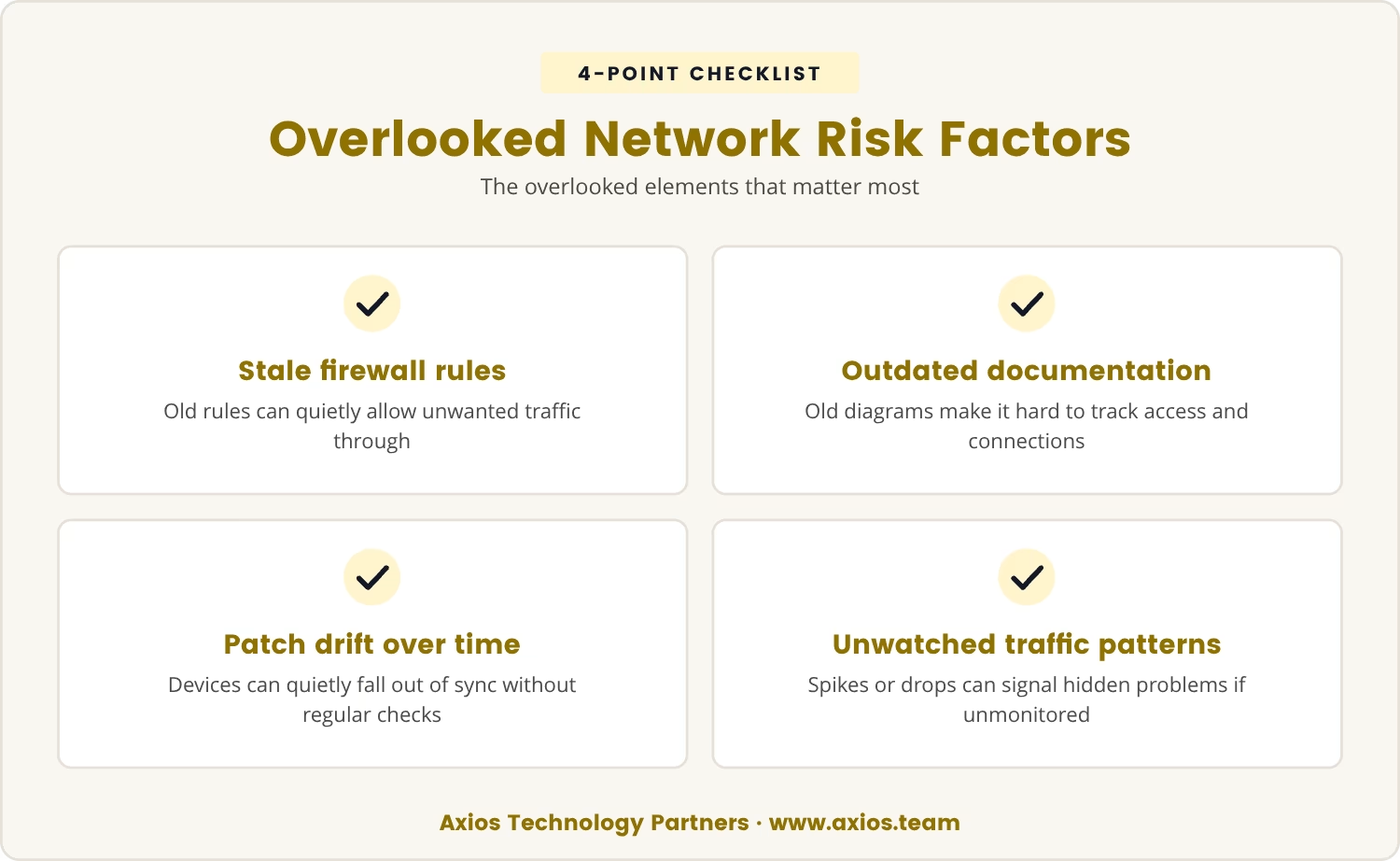
A truly usable network assessment checklist covers more than the basics. These five areas are the ones standard reports tend to overlook, even though they make the real difference in surfacing hidden risk:
Watching how data moves across the network can reveal unusual activity long before it becomes a problem. Regular network monitoring helps surface spikes, drops, or unexpected flows that might signal a breach or misconfiguration.
Firewalls only protect what their rules are actually built to cover, and those rules don't stay accurate on their own. Old entries pile up over time, opening gaps in security or blocking traffic that should be allowed through, which is why reviewing and cleaning them up matters.
An access point no longer in active use can still offer a way into the network. Identifying and disabling it shrinks the attack surface and helps keep the network secure.
Even with automated updates running, some devices fall behind anyway. Patch drift is what happens when systems land at different update levels, leaving some exposed—regular checks are what keep the whole network at a consistent baseline.
Accurate, current documentation underpins both troubleshooting and planning. Once records go missing or stale, managing the network and responding quickly to incidents both get harder.
Each of these five gaps carries its own consequence. Skip the firewall review, and unnecessary access can open a path straight to sensitive data; forget an access point during routine network changes, and it sits there as an open door for attackers.
Patch drift works more quietly but no less dangerously: a single unpatched device can become the weak link an attacker exploits, and without accurate documentation, it may not even be clear which device needs attention in the first place.
Traffic patterns shift for plenty of ordinary reasons, but ignoring them means missing the early signs of a real problem—a sudden jump in outbound traffic, for instance, can point to malware or data exfiltration, the kind of issue a basic vulnerability assessment simply won't catch.
For a business in Nashville that's grown or changed recently, these risks compound rather than stay flat. Networks evolve, and the ways attackers probe for weakness evolve right alongside them, which is exactly why staying ahead means checking past the obvious.
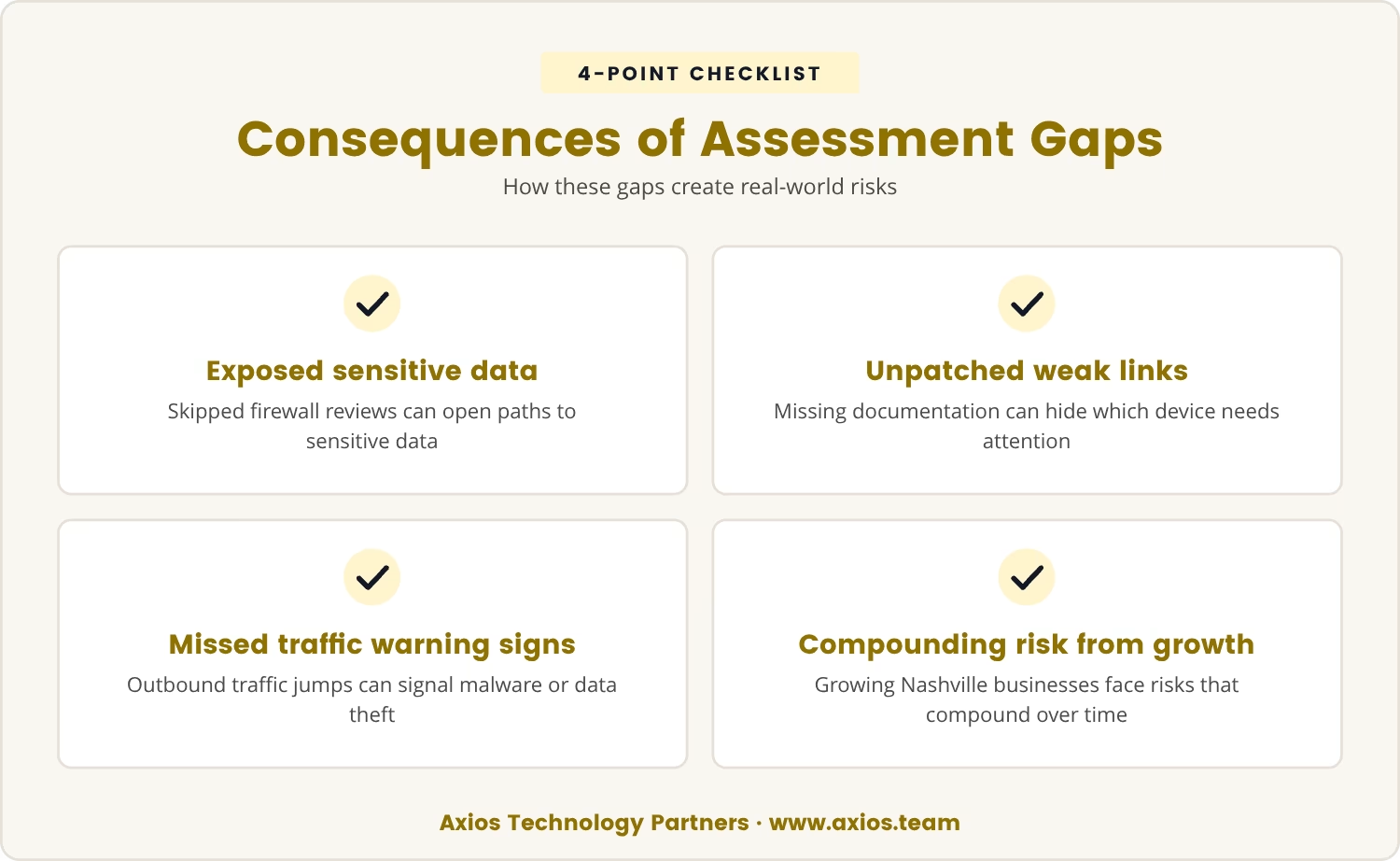
Closing these gaps calls for a process that goes beyond standard templates. A few practical actions make the difference:
Together, these steps surface risks that a vulnerability scan alone won't reveal, and along the way they make the network itself easier to manage and more resilient to change.
Choosing a provider for assessment services comes down to how they handle these hidden areas. Do they track traffic patterns over time, or just run a one-time scan? Do they review firewall rules in detail, or simply confirm the firewall is present?
A reliable network assessment should cover both technical controls and the documentation behind them, and it should adapt to the business's specific setup rather than run through a generic checklist. Worth asking, too: will the provider help identify unused access points and check for patch drift across every device?
One quick test of a current process: how fast could someone answer "Which devices on your network haven't been patched in the last month?" A slow or uncertain answer is usually a sign of gaps still hiding in the approach.
A thorough assessment does more than prepare a business for network upgrades, compliance requirements, and future growth—it's the groundwork for a network that stays secure and reliable well past the audit itself.
A network assessment checklist that covers only the basics leaves blind spots by design. Add in checks for traffic patterns, firewall rule hygiene, unused access points, patch drift, and documentation gaps, and the picture of the network's true state gets a lot clearer.
Those extra steps are what catch problems while they're still small, before they become incidents—and they make it easier to plan changes, respond to issues, and keep the business running without interruption. Given how high the cost of missing something can run, a checklist that digs deeper is worth the extra effort every time.

If your business has between 40 to 100 users, you may already have a checklist or regular network reviews in place, but it’s easy to overlook the hidden risks that standard assessments miss. At Axios Technology Partners, we understand how quickly these blind spots can develop as your network grows or changes.
We invite you to see how we approach network assessments differently—by focusing on the areas that matter most for long-term reliability and security. Let’s talk about what’s really happening in your setup and how we can help you address it.
Get free ongoing security awareness training for your entire team when you work with us—helping you address the human side of network risks as well.
For most businesses, a network assessment should be performed at least once a year. However, if your network changes frequently or you handle sensitive data, more frequent assessments—such as every six months—can help you catch issues sooner.
A vulnerability scan checks for known security weaknesses, like missing patches or open ports. A full network assessment goes further by reviewing network performance, configuration, documentation, and other areas that a scan might miss.
Yes, a well-designed assessment checklist can support compliance by ensuring that your network meets industry standards and regulatory guidelines. It also helps document your security controls and processes for audits.
A professional network assessment report should provide clear findings, actionable recommendations, and a summary of both strengths and weaknesses. It should also highlight any critical risks and suggest steps for improvement.
Check whether your network diagrams, device inventories, and access lists reflect your current setup. If you've added or removed equipment, changed configurations, or expanded your network, your documentation should be updated to match.