Discover how IT services for small business, especially backup and disaster recovery plans, can influence your insurance and loan rates significantly.

October 23, 2026
Adding more endpoint security tools often creates confusion and alert fatigue, making it easier for real threats to go unnoticed. A simpler, well-integrated approach usually delivers stronger protection.
Most businesses assume that stacking more endpoint security tools closes more gaps. In practice, the opposite tends to happen: overlapping platforms create blind spots and bury the alerts that matter most.
A single missed alert can mean lost data, downtime, or a costly breach—especially when a security stack is overloaded with too many endpoint tools. When businesses add more platforms to catch every threat, they often end up with more confusion and less real protection.
That confusion starts with a basic misunderstanding of the term itself. What is endpoint security? It's the practice of protecting devices like laptops, servers, and mobile devices from cyber threats. It's a core part of network security, but more tools don't always mean better results, since overlapping systems can make it harder for a security team to spot real problems.
Many companies believe that layering multiple endpoint security solutions will cover every gap. In reality, this approach can create new risks by overwhelming teams with duplicate alerts and inconsistent data. Understanding how endpoint security works—and how too many tools can backfire—helps you make smarter decisions about your business's protection.

Adding more endpoint protection platforms might sound like a smart way to stop threats, but it can actually introduce new problems. Each tool generates its own alerts, and when several platforms overlap, a team faces a flood of notifications.
That flood produces what's known as alert fatigue: when a team is bombarded with notifications, it's easy to miss the one that signals a real attack. As a result, genuine threats can slip by unnoticed while staff sort through false alarms.
Beyond alert fatigue, overlapping endpoint security software can create coverage gaps. If two tools are responsible for the same device, each might assume the other is handling a threat, and that confusion can leave some endpoints unprotected at critical moments.
The more complex the stack, the harder it is to track what each tool is doing, which makes weaknesses harder to spot and slows any response when something goes wrong. For businesses in Nashville, where IT resources may already be stretched thin, this can be a costly mistake.
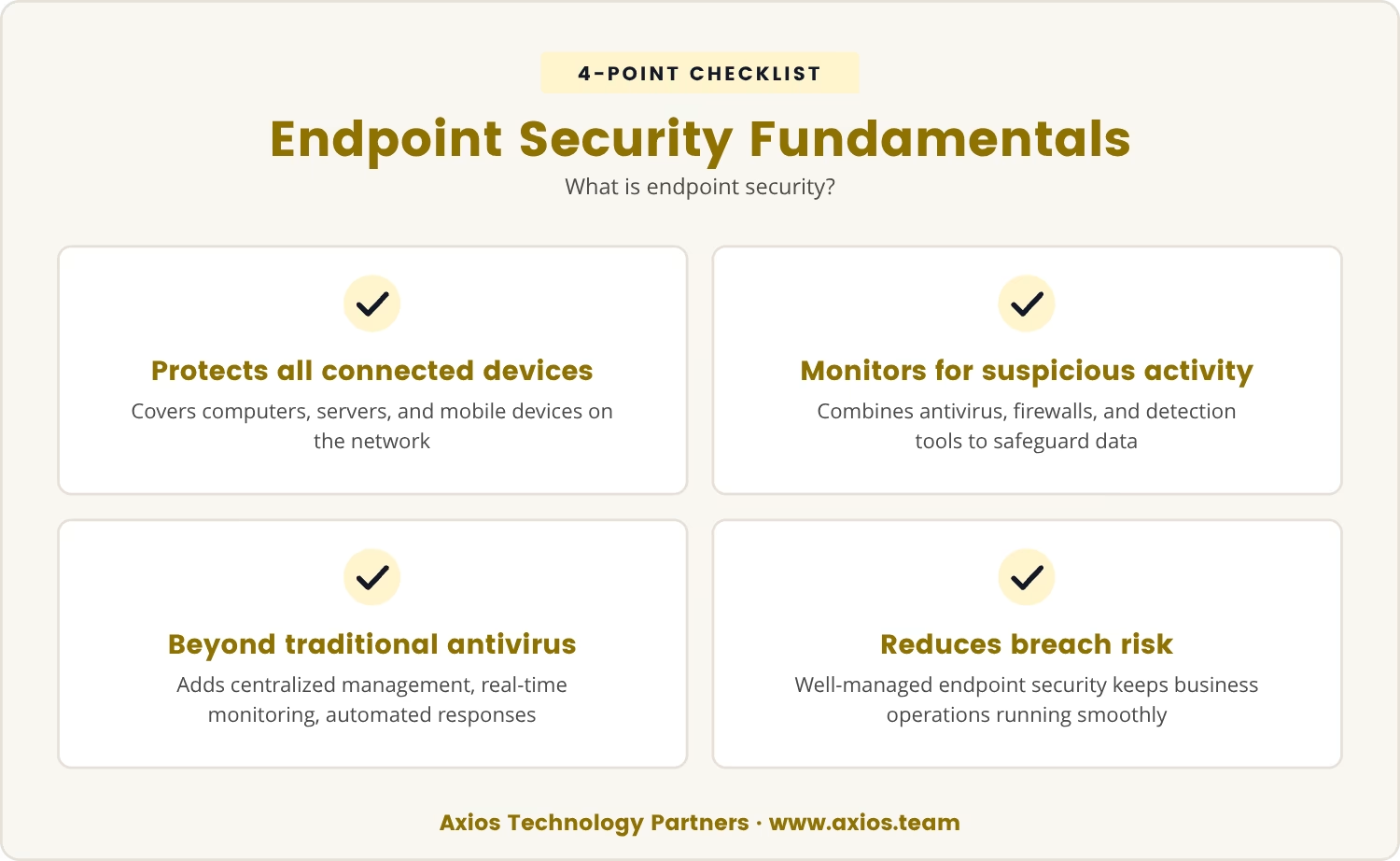
It's easy to think that more alerts mean better visibility, but too many alerts can actually reduce the ability to respond to threats effectively.
When a security team receives hundreds of notifications daily, investigating each one thoroughly becomes impossible. Important alerts get buried under less urgent ones, and the team may start ignoring notifications altogether.
That overload also slows response time: by the time a real incident gets identified, the damage may already be done. Effective endpoint security depends on quality, not quantity, of alerts.
Instead of relying on multiple overlapping tools, it helps to follow endpoint security best practices like tuning alert thresholds and using platforms that prioritize real threats. This approach helps a team act faster and with more confidence.
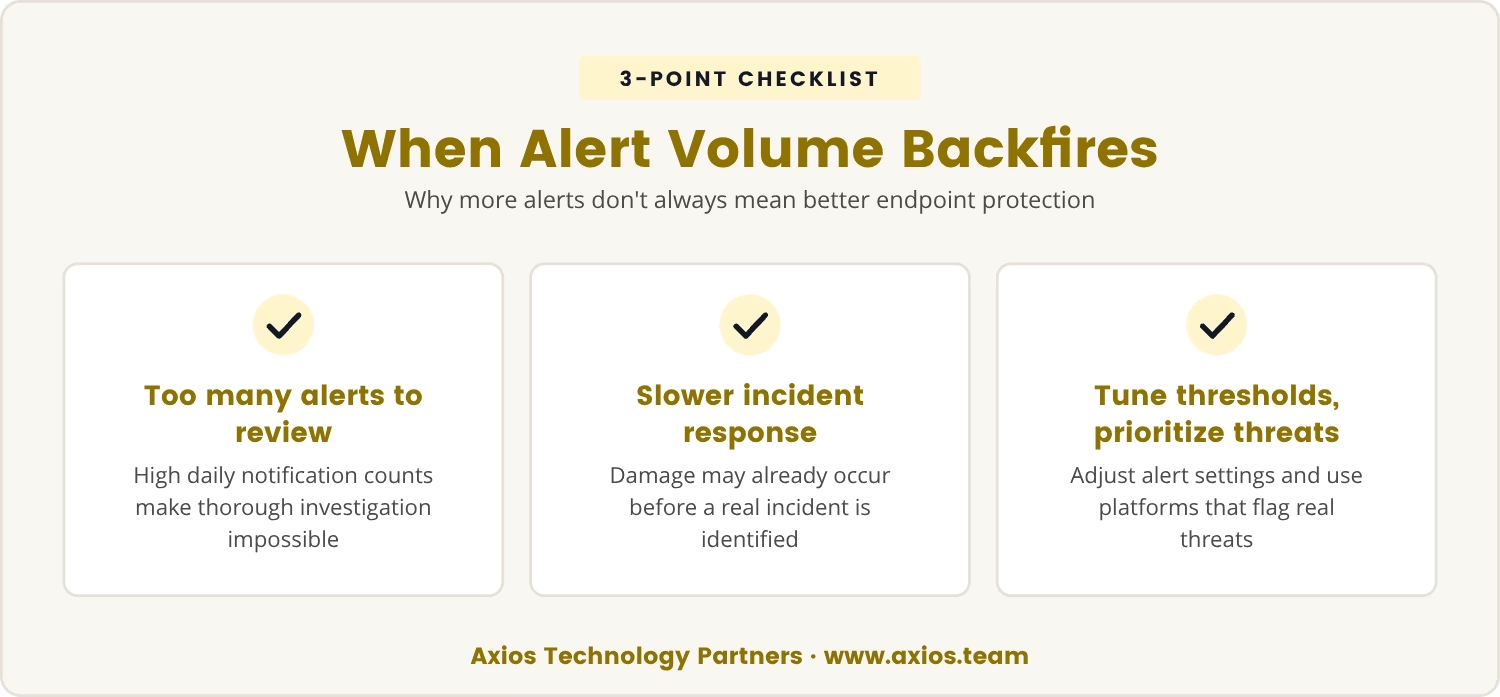
Endpoint security is the practice of protecting all the devices that connect to a corporate network—such as computers, servers, and mobile devices—from cyber threats.
A strong endpoint security solution monitors these devices for signs of malware, unauthorized access, or other suspicious activity, using a combination of antivirus software, firewalls, and advanced detection and response tools to keep data safe.
Modern endpoint security goes further than traditional antivirus, adding centralized management, real-time monitoring, and automated responses to threats. Together, these features help a security team respond to threats quickly and consistently.
The goal underneath all of it is to prevent attackers from using endpoint devices as an entry point into the network. When managed well, endpoint security reduces the risk of data breaches and keeps a business running smoothly.
Deploying multiple endpoint protection solutions might seem like a way for each one to fill in the gaps left by the others. In practice, this overlap can create blind spots instead.
Each endpoint security platform may have its own way of detecting threats and reporting incidents, and if these systems don't communicate well, critical information falls through the cracks. One tool might detect a virus but fail to alert the main console, leaving the team unaware of the threat.
Coverage gaps also happen when tools are not configured to work together: if one platform disables a feature because it detects another tool doing the same job, protection can disappear without anyone realizing it.
This risk runs especially high in environments where bring-your-own-device policies are common, since personal devices may not be covered by every endpoint security program—leading to inconsistent protection across the network.
Alert fatigue doesn't just mean missed threats—it can also lead to burnout and turnover among security staff. When a team spends hours sorting through low-priority alerts, less time remains for real security incidents.
Over time, that constant pressure reduces morale and increases mistakes. A security team stuck in reaction mode is less likely to spot advanced threats or respond quickly to a data breach.
Businesses with 40 to 100 users often run small security teams, and for these teams every wasted minute counts. Streamlining endpoint security management helps staff stay focused and effective.
A strong endpoint security approach doesn't rely on the number of tools—it relies on how well those tools work together. The essential components look like this:
A single management console lets a team monitor all endpoint devices from one place, reducing confusion and speeding up response times.
Modern endpoint detection and response systems can identify and react to threats automatically, minimizing manual work and human error.
Applying the same security policies across all devices ensures that every endpoint is protected equally, whether it's a laptop in the office or a mobile device on the road.
Keeping endpoint security software up to date closes vulnerabilities that attackers might exploit, and automated patch management helps ensure nothing gets missed.
Training staff to recognize phishing attempts and suspicious activity reduces the risk of human error leading to a breach.
A cluttered setup often announces itself through a handful of recognizable warning signs:
The belief that more endpoint solutions equal better protection is easy to understand, but it often leads to the opposite result, since a security environment cluttered with overlapping tools risks missing the very threats it's meant to stop.
The alternative is a streamlined, effective endpoint security program built from solutions that integrate well, reduce alert fatigue, and give a team the clarity needed to respond to threats quickly. For businesses in Nashville and beyond, this approach leads to stronger protection and a more resilient IT environment.

If your business has 40 to 100 users, you may be struggling with a complex security stack that creates more confusion than protection. At Axios Technology Partners, we understand how alert fatigue and overlapping tools can leave your team exposed.
We invite you to see how our approach can help you streamline endpoint security and give your team the clarity they need to respond quickly and confidently.
Get free ongoing security awareness training for your whole team—available to qualifying businesses looking to reduce alert fatigue and improve endpoint protection.
Endpoint detection and response (EDR) tools go beyond traditional antivirus by monitoring for suspicious activity and responding to threats in real time. Antivirus software focuses on known threats, while EDR looks for unusual behavior, catching advanced attacks that might slip past older solutions.
Endpoint security protects devices used outside the office, such as laptops and mobile devices. With more employees working remotely, securing every endpoint reduces the risk of data breaches and keeps business information safe no matter where a team is located.
Warning signs include a security team overwhelmed by constant notifications, struggling to prioritize alerts, or missing real incidents because too many low-value ones compete for attention. Streamlining tools and tuning alert settings can help reduce this fatigue.
Small businesses benefit from endpoint protection platforms that offer centralized management, automated responses, and easy integration with existing systems. Choosing a solution that fits a team's size and skills helps ensure reliable protection without unnecessary complexity.
Clear security policies for bring-your-own-device (BYOD) environments are key: strong passwords, regular updates, and endpoint security software should be required on all personal devices that access the network. This maintains consistent protection across the business.